
Few islands reward the patient sailor quite like Milos. Seeing Milos by yacht is the only way to truly understand its strange, beautiful geology, because so much of what makes the island remarkable sits at the waterline or just beyond it, reachable only from the sea. The volcanic coast folds itself into white coves, sulphur stained cliffs and sea caves that no road will ever take you to, and a yacht turns the whole island into a series of private discoveries.
Milos lies in the southwestern Cyclades, a little apart from the busier circuit of Mykonos and Paros. That quiet distance is part of its charm. The island feels softer, slower and far less crowded than its famous neighbours, and the anchorages tend to stay calm in conditions that would have you reaching for shelter elsewhere. For a charter built around swimming, snorkelling and long lunches at anchor, it is hard to better.
Why Milos Belongs on a Cyclades Charter
The island was shaped by ancient volcanic activity, and the evidence is everywhere. Mineral rich rock streaks the cliffs in white, ochre, rust and grey, and centuries of mining have left their own quiet marks along the shore. The result is a coastline that looks like nowhere else in Greece, in places almost lunar, in others bleached to a brilliant chalk white.
What makes all of this matter for a charter is access. Many of the finest spots have no road, no taverna and no crowd, only a sheltered patch of turquoise water and a tender to take you ashore. A yacht lets you arrive early, swim before the day boats appear and move on when they do. You are not chasing the island so much as letting it unfold around you.
The Sea Caves and Coves Worth the Detour
The southern and western shores hold most of the drama. These are the corners where a yacht earns its keep, and where a steady, attentive crew makes all the difference.
- Kleftiko. The island’s signature anchorage, a cathedral of white volcanic rock rising from impossibly clear water, with arches, tunnels and small caves to explore by tender, paddleboard or snorkel. It is exposed to the south, so it suits a settled forecast and is best in the morning before the day boats arrive from the harbour.
- Sykia. A collapsed sea cave open to the sky, its roof long gone, leaving a pocket beach lit from above. Swimming in is the only way to feel it properly.
- Gerakas and the western cliffs. A run of caves and inlets along the wilder west coast, quiet, dramatic and rarely busy.
None of these are places to take for granted. The west and south of Milos are open to the prevailing summer wind, and a swell can build quickly. This is exactly where local knowledge counts, and where our crews plan the day around the conditions rather than the other way round.
Lunar Beaches and Where to Drop Anchor
The beaches of Milos are a category of their own. Some you reach on foot, but the most striking are far easier, and far emptier, from the water.
Sarakiniko
The most photographed shore on the island, a landscape of smooth white rock sculpted by wind and sea into soft, dune like waves. It genuinely does look lunar, especially in the low light of early morning or late afternoon. It is open to the north, so it is a place to enjoy when the meltemi is sleeping rather than a guaranteed lunch stop.
Tsigrado and Firiplaka
On the more sheltered south coast, these neighbouring beaches offer warm coloured cliffs and clear, shallow water, well suited to a swim stop and an easy afternoon at anchor.
Provatas and the south bays
A cluster of gentler, sandier bays along the south that tend to stay calmer, making them sensible choices for families or for nights when you want flat water under the hull.
Getting There and Sensible Passage Planning
Milos sits naturally at the southwestern edge of a Cyclades route, which makes it a rewarding destination to build a week or ten days around. Rough guidance, always subject to wind and sea:
- From Sifnos: a comfortable short hop, often two to three hours under sail, making the two islands easy to pair.
- From Serifos: a little longer, broadly three to four hours depending on conditions.
- From Folegandros or the southern Cyclades: a half day passage that opens the door to Santorini’s caldera further east.
- From Athens directly: a long open water leg, better broken with a night at Kythnos, Serifos or Sifnos than attempted in one push.
The governing factor across the Cyclades is the meltemi, the dry northerly that blows hardest from roughly July into August. It brings clear skies and superb sailing, but it also funnels between the islands and can make exposed western and southern anchorages uncomfortable. A good itinerary keeps a sheltered alternative in reserve for every planned stop, and a good skipper will happily reshuffle the days to put you in the right bay at the right time. If you want to understand the wind before you go, our journal explains it in more depth.
What Life on Board Looks Like
The appeal of Milos by yacht is as much about the rhythm of the days as the places themselves. Mornings tend to start early, slipping into Kleftiko or Sykia before anyone else, with the water still glassy and the light still soft. Breakfast comes at anchor, a swim follows, and the tender carries you into caves the day boats cannot reach.
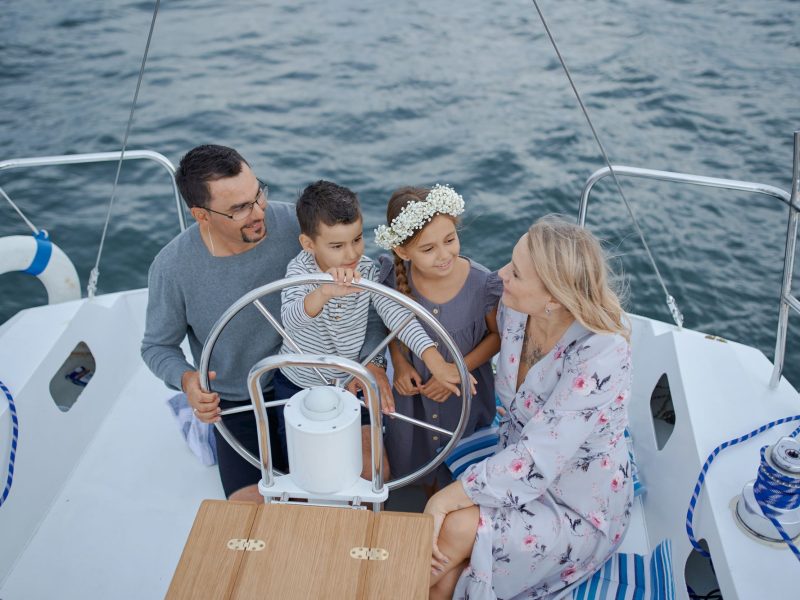
On a crewed charter, the practical side simply dissolves. The skipper reads the forecast and chooses the anchorage, the chef plans lunch around the local catch and the island’s produce, and you are left to do very little except enjoy it. Paddleboards, snorkelling gear and a tender turn each stop into its own small expedition, and the deck becomes the best seat on the island as the sun drops behind the western cliffs.
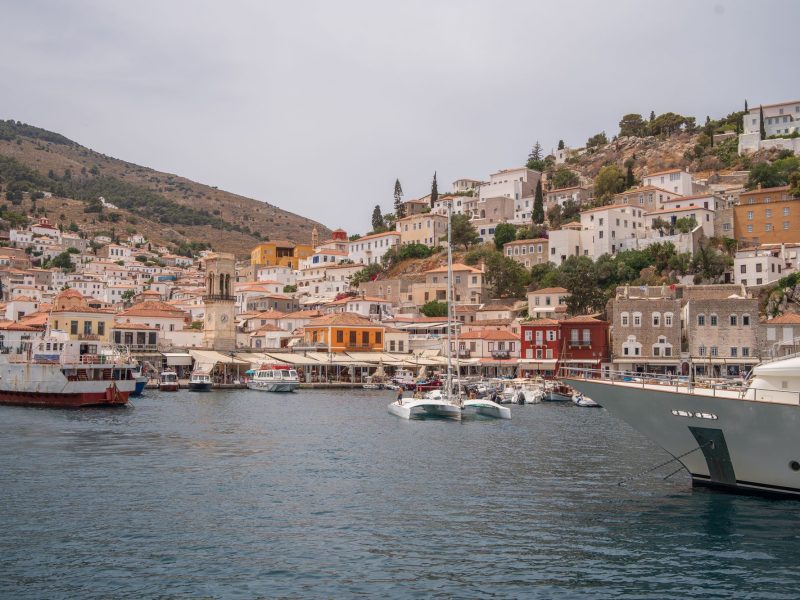
For the harbour itself, the small port of Adamas is the island’s hub, with provisioning, tavernas and the colourful boathouses of the fishing villages nearby. The hillside town of Plaka, just inland, rewards an evening ashore with quiet lanes and one of the finest sunsets in the Cyclades.
Planning Your Milos by Yacht Charter
Milos suits the traveller who values space and texture over a long list of names to tick off. A few nights here, woven into a wider Cyclades route through Sifnos, Serifos and beyond, gives you the island’s caves, its lunar shores and its calm bays without ever feeling rushed. Late spring and early autumn are especially kind, with warm water, lighter winds and far gentler crowds.
When you are ready to shape a route around this quiet, extraordinary island, our team can help you match the right yacht and crew to the way you like to travel. There is no need to hurry the decision. Milos has waited a very long time to be seen from the water, and it will be just as remarkable whenever you choose to arrive.