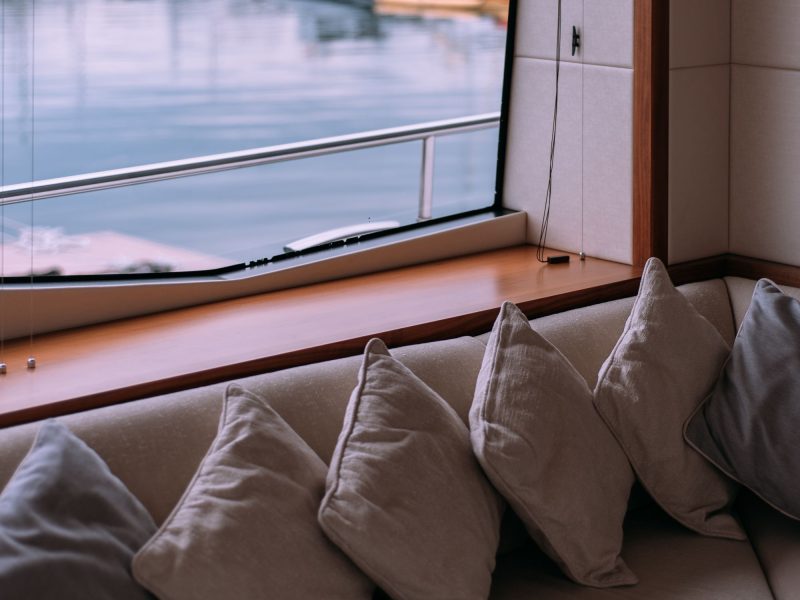

On a late spring yacht charter Greece reveals one of the best kept secrets of its sailing calendar. By the time the islands begin to warm in May, the sea has settled, the harbours are quiet and the light has that clear, gentle quality that flatters every cove. For travellers who want the Aegean at its most generous, late spring offers a window that the busier weeks of midsummer simply cannot match.
It is a season of long, unhurried days. The wildflowers are still out on the hillsides, the tavernas are open but rarely full, and the anchorages that vanish under a forest of charter yachts in August are yours to enjoy almost alone. Below we explain why this window rewards the discerning sailor, and how to plan a trip that makes the most of it.
The Weather Settles Without Turning Fierce
Spring in Greece is a gradual handover. The unsettled lows of winter fade through April, and by mid May the prevailing pattern across the Aegean becomes more reliable. Daytime temperatures typically sit in the low to mid twenties Celsius, warm enough for long lunches on deck and an afternoon swim, but rarely the heavy, still heat of late July.
The crucial detail for any sailor is the wind. The meltemi, the strong, dry northerly that funnels down through the Cyclades in high summer, has usually not yet established itself in late spring. You may meet brisk afternoon breezes, and the occasional spring system can still bring a blow, but the relentless three and four day meltemi episodes that reshape August itineraries are largely a summer phenomenon. That makes passage planning calmer and more predictable, and it opens up anchorages on exposed northern and eastern shores that become untenable later in the year.
The sea itself is the one honest caveat. Having cooled all winter, the water is still on the fresh side in May, often around the high teens to low twenties Celsius. By June it has warmed appreciably. Bring a light wetsuit or rash vest if you feel the cold and you will swim happily regardless.
Quieter Anchorages and Calmer Harbours
This is where late spring truly earns its reputation. The places that define a Greek charter are at their best when you are not jostling for them.
- Cyclades. The pretty horseshoe bay of Ornos on Mykonos, the sweeping sands of Naxos, the sheltered inlets of Paros and Antiparos: in late spring you can drop anchor without circling for space, and a stern line ashore is rarely a competitive sport.
- Saronic Gulf. Hydra harbour, so tight and theatrical, is a far gentler proposition before the summer fleet arrives. Poros and the wooded coves of the Methana peninsula feel almost private.
- Ionian. The greener, softer western islands, from the bays of Lefkada down towards Meganisi, are glorious in spring when the hills are still vivid and the tavernas have time for you.
Mooring in the small island harbours is simpler too. With fewer boats competing for a finite quay, your crew can take a relaxed berth in the early evening rather than racing in at four o’clock to secure a spot. The whole rhythm of the day softens.
Shorter, Gentler Passages Become Possible
Because the weather is settled, late spring is forgiving of ambitious routes and rewarding of leisurely ones. A few realistic markers to anchor your planning:
- Mykonos to Naxos is a comfortable morning sail of roughly twenty to twenty five nautical miles, three to four hours under sail in a moderate breeze.
- From Athens, the hop down into the Saronic to Aegina or the Methana coast is short enough to leave after a relaxed late morning departure.
- Crossing the open central Aegean towards Santorini is more committing, but in the calmer spring conditions it is a far more pleasant proposition than punching into a summer meltemi.
The practical upshot is flexibility. You can choose a slow, four or five island loop with long lazy days at anchor, or a more adventurous reach across to a further group, knowing the forecast is less likely to box you into a port for days. For more on how the wind dictates routing through the year, our guide on the seasonal patterns of the Aegean is a useful companion read.
Why a Late Spring Yacht Charter Greece Offers Real Value
Late spring sits in what the industry calls the shoulder season, and that has tangible advantages for the traveller who plans ahead.
Choice of yacht
Before the peak weeks fill, the best boats and the most sought after crews are still available. If you have a particular catamaran, a specific captain or a chef whose cooking you have heard about, late spring is the time you are most likely to secure them. By contrast, the prime midsummer dates are claimed early and the choice narrows quickly.
Honest cost guidance
Charter pricing in Greece typically tiers by season, and the shoulder weeks of late spring usually sit below the July and August peak. We always quote in honest ranges rather than promises, because rates vary by yacht, length and exactly which week you choose, but as a rule the same boat that commands its highest fee in high summer will often be more accessible in May and early June. You are paying for the vessel and crew, not for the crowds.
A relaxed crew
There is a quieter benefit too. Early in the season, our crews are fresh, rested and unhurried. They have time to learn what you like, to suggest the cove you would never have found, and to cook the long, slow dinners that define a good charter. By the relentless middle of August, even the best crews are working hard. In late spring you get their full, generous attention.
How to Plan a Late Spring Charter
A little forethought turns a good spring trip into a great one.
- Book early for the best boats. The yachts go first even though the season is quieter, so commit to your dates once you know them.
- Pack for range. Warm afternoons can give way to cool evenings at anchor. A light jumper, a windproof layer and proper deck shoes earn their place alongside the swimwear.
- Keep the itinerary flexible. The settled weather is an invitation to improvise. Sketch a route, then let your captain refine it with the actual forecast.
- Lean into the slowness. This is not the season to tick off ten islands in seven days. Choose fewer anchorages, linger longer, and let the empty bays do their work.
If you are weighing the wider question of which sea suits your party, or whether a crewed yacht is the right call, those decisions matter as much as the timing, and they shape everything that follows once you are aboard.
A Season Worth Choosing
Late spring asks only a little patience with a fresher sea, and in return it gives you the Greek islands as they are meant to be experienced: warm, calm, uncrowded and unhurried. The anchorages are open, the harbours are gentle, the wind is kind and the light is at its most beautiful.
When you are ready to find your week and your yacht, we would be glad to help you plan it. Tell us how you like to travel and we will shape a late spring charter around it, quietly and carefully, with a crew who have the time to make it yours.