
A family yacht charter in Greece is one of the rare holidays that genuinely suits everyone, from a toddler who wants to throw pebbles off the swim platform to a teenager who would rather be left alone with a paddleboard. What makes a family yacht charter Greece holiday work is not luxury for its own sake, but rhythm: short passages, sheltered swimming, and a deck that becomes the children’s whole world for a week. Plan it well and the Aegean rewards you with calm mornings, warm shallow bays and the kind of slow, screen free days that are hard to engineer on land.
This is a practical guide rather than a brochure. Below you will find honest advice on where to sail with children, what daily life actually looks like on board, and how to choose the right boat and timing so the sea works with you rather than against you.
Choosing the right sea for a family yacht charter Greece adventure
Greece is not one cruising ground but several, and they do not all suit families equally. The choice usually comes down to wind and distance.
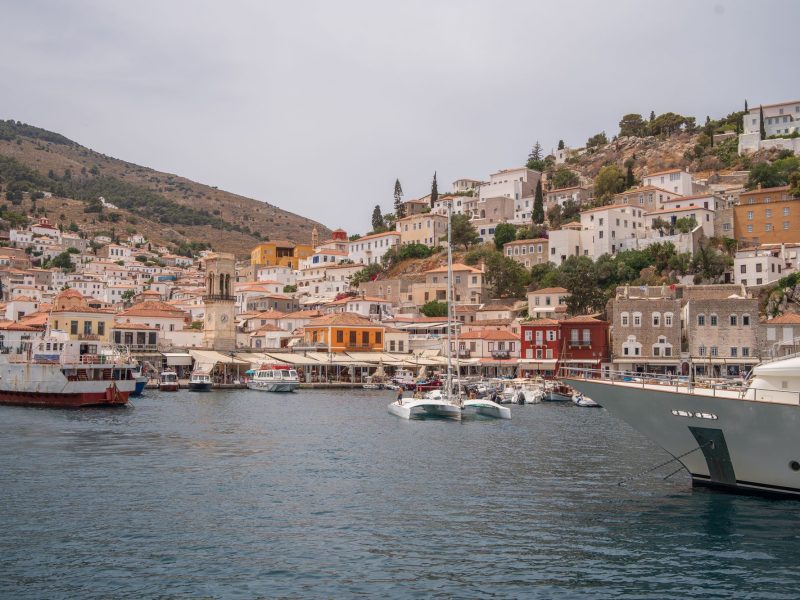
The Saronic Gulf, just south of Athens, is the gentlest place to start. Distances between Aegina, Poros, Hydra and Spetses are short, often an hour or two under power or sail, so nobody is stuck on board long enough to get bored or queasy. The water is sheltered, the harbours are pretty, and you are never far from a pharmacy or a paediatrician should you need one.
The Ionian, on the western side of the country, is the other classic family choice. Corfu, Paxos, Lefkada and the islands around them sit in greener, calmer waters. The summer breeze tends to be a predictable afternoon thermal rather than a hard blow, mornings are usually glassy, and the bays are forgiving.
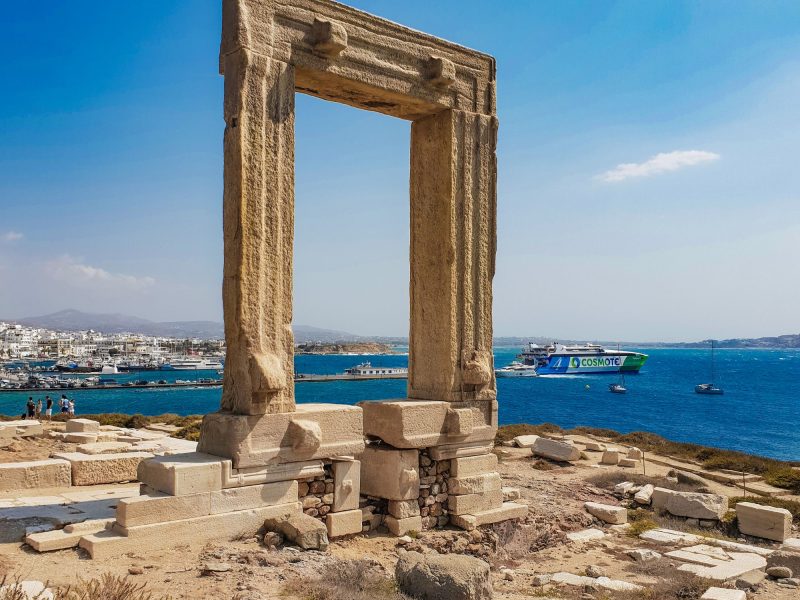
The Cyclades, home to Mykonos, Paros, Naxos and Santorini, are spectacular but more exposed. In high summer the meltemi, the strong northerly wind, can funnel through the islands for days at a time and make passages bouncy. Families can absolutely sail here, but it asks for a more flexible itinerary and ideally a slightly larger, steadier boat. If your heart is set on the Cyclades with small children, lean towards late spring or early autumn when the wind is calmer.
The shape of a good family day
The single most useful planning principle is this: keep passages short. Children measure a sailing day not in nautical miles but in how soon they can get back in the water. A sensible family rhythm looks something like this.
- Morning: a relaxed start, breakfast on deck, then a passage of two to three hours at most while the sea is still calm.
- Midday: anchor in a sheltered bay for a long swim, lunch on board and a proper rest out of the sun.
- Afternoon: a short second hop, or simply stay put with the paddleboards and snorkelling gear out.
- Evening: into a harbour for an early dinner ashore, or a quiet anchorage with the lights of a village across the water.
Resist the urge to tick off islands. One well chosen anchorage a day, with time to actually enjoy it, beats a frantic tour that leaves everyone tired. Most families find that a loop of four or five islands over a week is plenty.
Anchorages that earn their keep with children
Some bays are simply better suited to families: shallow, sandy, protected from swell and within easy reach of a beach or taverna. A few reliable favourites:
- Russian Bay (Poros), Saronic: a wide, shallow, well protected anchorage with warm water and an easy beach, a short hop from Poros town.
- Ormos Vathy and the Lefkada bays, Ionian: a string of green, sheltered inlets where the holding is good and the swimming is gentle.
- Kolona Bay (Kythnos), Cyclades: a sandbar with water on both sides, calm in most conditions and a perennial children’s favourite, best in settled weather.
- Plaka and the southern bays of Naxos: long sandy shallows that are ideal for small swimmers when the meltemi allows.
Your crew or skipper will always have a plan B. Aegean weather shifts, and the bay that is perfect in a westerly can be untenable in a northerly. Trusting that local judgement is part of the holiday.
Catamaran or monohull for a family
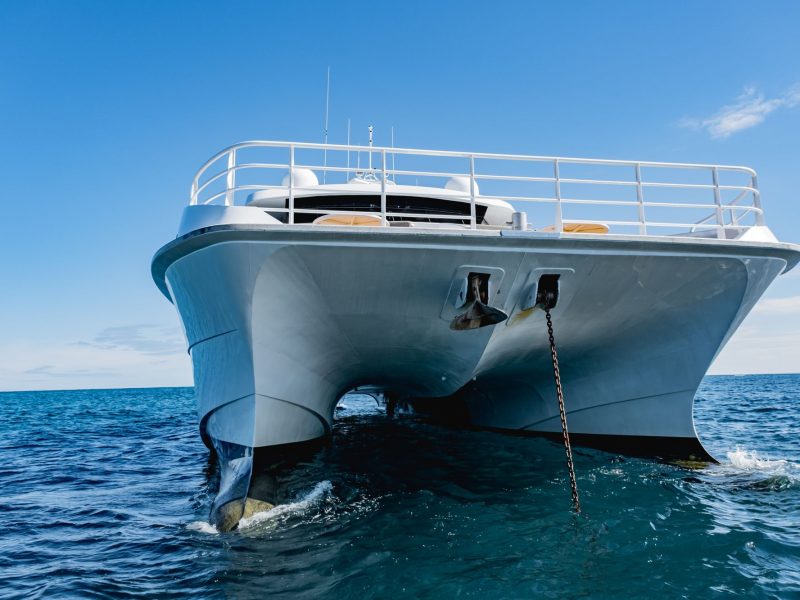
For most families the answer is a catamaran, and the reasons are practical rather than fashionable. A catamaran sits flat rather than heeling, which calms nervous first timers and stops drinks and toys sliding across the saloon. The wide deck and trampolines give children a safe, contained space to play, and the steps down to the water are gentle. Cabins are spread across two hulls, so parents and children can have a little separation at the ends of the day.
A monohull or motor yacht still has its place, particularly for families chasing longer distances or a faster passage, but if comfort at anchor and space to spread out matter most, the catamaran usually wins. If you would like to weigh this up in more detail, our companion piece on the subject goes deeper.
Life on board: safety, food and the small things
Children adapt to boat life astonishingly quickly, but a few sensible habits make all the difference.
Safety
- Bring or request correctly sized life jackets for each child. The boat’s spares are rarely a good fit for the very young.
- Agree a simple rule that the youngest wear them on deck while under way, and around the harbour.
- Brief older children on the swim ladder, the danger of the engines and how to call an adult before going in.
Food and routine
On a crewed charter, the chef will happily cook for fussy eaters: plain pasta, fresh fruit and grilled fish are easy requests, and it is worth flagging allergies and preferences before you board so the provisioning reflects them. On a bareboat charter you will provision yourself, so stock the things that keep small people content between meals. Either way, a stable nap and bedtime routine survives the move afloat better than you might expect; the gentle motion tends to send children off rather than keep them up.
Shade and sun
The Greek sun is stronger on the water than on land thanks to the reflection off the sea. A good bimini, high factor sun cream reapplied often, hats and rash vests for swimming are not optional. Plan the longest deck time for early morning and late afternoon.
When to go, and a gentle word on pace
Late spring, roughly May into mid June, and early autumn in September are the sweet spots for families. The sea has warmed enough for long swims, the meltemi is usually milder than in high summer, the islands are quieter and the heat is kinder to small children. July and August are glorious but hotter and busier, and in the Cyclades windier; if those are your only weeks, favour the Saronic or Ionian.
Above all, go slowly. The point of taking children to sea is not to see everything but to give them a week of swimming off the back of the boat, sleeping to the sound of water and waking up somewhere new. When you are ready to shape an itinerary around your own family, with the right boat, the calmest seas and a crew who genuinely enjoy young guests, we would be glad to help you plan it, unhurried and at your pace.