
Ask ten seasoned skippers for the best Greek islands to sail and you will get ten different answers, because the right water depends entirely on the trip you have in mind. Greece is not one sea but several, each with its own rhythm of wind, distance and character, and knowing which suits you is the single most useful decision you can make before stepping aboard. This guide walks through the three regions we charter most often, the Cyclades, the Saronic and the Ionian, so you can match the cruising ground to your crew, your pace and your appetite for adventure.
The Cyclades: open water, big light and bold landscapes
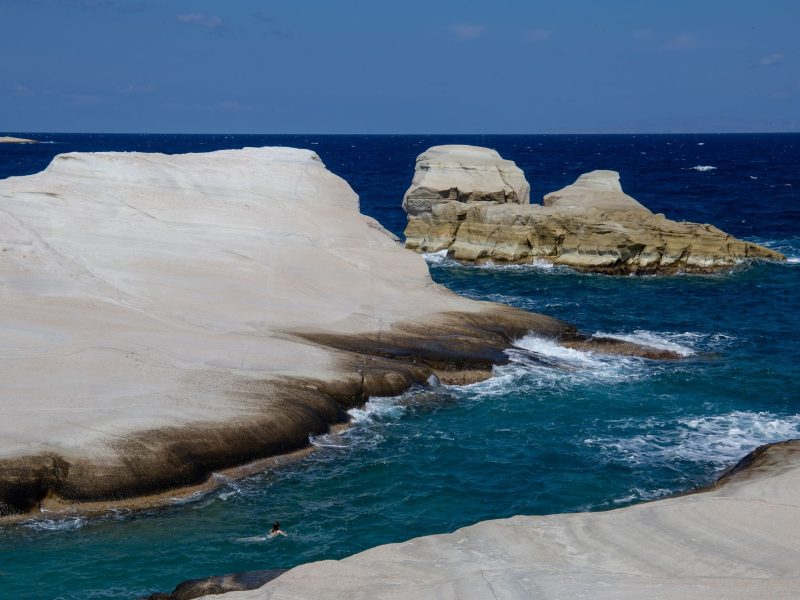
The Cyclades are what most people picture when they imagine the Aegean. Whitewashed villages spilling down brown hillsides, deep blue water, and that famous clarity of light. This is the region of Mykonos, Paros, Naxos, Milos and, at its southern edge, the caldera of Santorini. It is glorious, and it is also the most demanding of the three to sail.
The reason is the meltemi, the dry northerly wind that funnels down the Aegean through the summer months. From roughly July into early September it can blow hard for days at a time, often Force 6 or 7, occasionally more. The sailing is exhilarating and the air is wonderfully clear, but passages between islands are open and exposed, and an afternoon crossing can become a serious business. Distances are real too. The hop from Mykonos to Naxos is a comfortable couple of hours under engine in calm conditions, but Paros to Milos is a longer leg of perhaps four to six hours depending on wind and sea, and Santorini sits well south of the main cluster.
The Cyclades reward crews who want a sense of voyage and do not mind planning their days around the wind. A few realities worth knowing:
- Mornings are usually calmer than afternoons in meltemi season, so longer passages are best made early.
- Many of the prettiest bays are open to the north, which means the comfortable overnight anchorage on a windy night may be on the southern side of an island, away from the postcard village.
- Some harbours, Mykonos and Santorini among them, are busy and not always restful at anchor, so a good itinerary balances the headline names with quieter neighbours like Schinoussa, Koufonisia and the small Cyclades.
If you are drawn here, late spring and September are gentler windows, with lighter winds and warm water but without the full force of high summer. We cover that seasonal picture in more depth in When to Sail the Aegean: A Month by Month Guide to the Greek Charter Season.
The Saronic: short hops, calm seas and a soft landing
If the Cyclades are the grand opera, the Saronic Gulf is the chamber concert, intimate, accessible and far more forgiving. Lying just off Athens, the Saronic is the most sheltered of the three regions and the easiest to reach, which makes it ideal for shorter charters, first timers, and anyone travelling with children or guests who are new to life on the water.
The meltemi softens considerably here, broken up by the surrounding mainland and the bulk of the Peloponnese. Seas are generally calmer, passages are short, and you are rarely more than a couple of hours from a sheltered harbour. A classic week might run from Athens out to Aegina, then Poros, Hydra and Spetses, with the gulf and the coast of the Peloponnese never far away.
The islands themselves are a real pleasure. Hydra, with cars banned and a perfect crescent harbour, feels timeless. Spetses has elegance and good beaches. Poros sits in a narrow, almost river like channel that is a joy to motor through. Because the distances are modest, you spend less time on passage and more time swimming, lingering over lunch and exploring ashore. For a fuller route through the gulf, see Sailing the Saronic Gulf: Athens, Hydra, Spetses and Poros in a Week.
Who the Saronic suits best
- Families and mixed groups who want gentle days and plenty of swimming.
- Shorter trips of four or five nights where you do not want to lose a day to a long delivery.
- First time charterers building confidence before a more ambitious Aegean adventure.
The Ionian: green hills, steady breezes and easy cruising
Cross to the western side of Greece and everything changes. The Ionian, strung along the coast from Corfu down through Lefkada, Kefalonia and Ithaca, is greener, softer and noticeably more relaxed than the Aegean. The hills are wooded, the architecture is touched by Venetian history, and the whole region has an unhurried feel.
Crucially, the Ionian has no meltemi. Instead, summer afternoons often bring a reliable, moderate breeze from the northwest, the maistro, that fills in around midday and eases by evening. It is close to ideal sailing wind, steady enough to be fun, gentle enough to be comfortable, and predictable enough to plan around. Combined with short distances and abundant sheltered bays, this makes the Ionian the most relaxing of the three regions to cruise.
The inland sea around Lefkada is particularly well suited to easy days. Anchorages like Sivota, the bays of Meganisi, and the small harbour towns of Fiskardo on Kefalonia and Vathy on Ithaca are close together, often within an hour or two of each other, so you can sail in the afternoon and still be settled with a swim before dinner. For anyone new to chartering, or for families wanting calm water and green surroundings, it is a wonderful introduction. We explore it further in The Ionian for First Timers: Corfu, Lefkada and the Greener Side of Greece.
How to choose the best Greek islands to sail for your crew
There is no single best answer, only the best fit for you. A few honest pointers:
- Choose the Cyclades if you want dramatic landscapes, iconic islands and a real sense of voyage, and if you and your crew are comfortable with stronger wind and open crossings. Lean towards late spring or September for an easier ride.
- Choose the Saronic if you have less time, are sailing close to Athens, or want the gentlest possible conditions for children or first timers.
- Choose the Ionian if you want steady, friendly sailing, short hops, green scenery and the most relaxing tempo of the three.
It is also worth being realistic about time. A week is comfortable for the Saronic or the Ionian, and enough for a focused loop of the central Cyclades, but trying to reach Santorini and back from Mykonos in seven days leaves little room for weather. Give the Aegean a little more slack than you think you need, and let the wind shape the plan rather than fighting it.
What stays the same on board
Wherever you sail with us, the experience aboard is consistent. Our crews know these waters intimately and will adjust the route daily to find the calmest anchorages and the best light. You will swim from the boat each day, eat well, and wake somewhere quiet. The region sets the character of the trip, but the comfort and care travel with you.
When you are ready to start shaping a route, we are happy to talk it through, honestly and without pressure. Tell us who is coming, how long you have, and what kind of days you are dreaming of, and we will help you choose the sea that fits. The best Greek islands to sail are, in the end, simply the ones that suit your particular crew, and that is exactly the conversation we love to have.